Mabon 2026: How to Celebrate the Autumn Equinox
Mabon is a modernized Autumn Equinox celebration centered around harvest, thankfulness, balance, and preparation for the upcoming darker months. For ancient pagans, the harvest represented months of work finally coming to fruition.
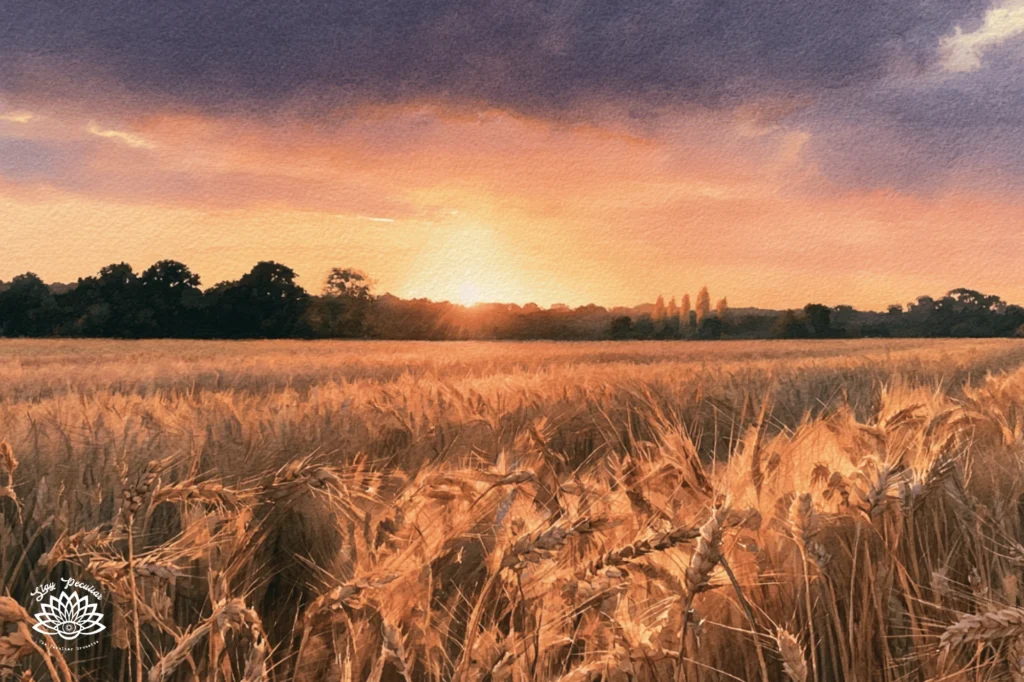
In medieval English villages, nearly everyone was involved in bringing in grain, from cutting and binding crops to hauling and storing them in barns.
Mabon reminds us to notice our own harvest: what’s grown, where we have enough, what deserves protecting, and what we want to bring into the next season. You don’t need to recreate an ancient ritual to connect with those ideas. Sometimes simply noticing the changing season is enough.
Posts on this site may contain affiliate links, allowing me to earn a small commission from your purchases (at no extra cost to you!).
Table of Contents
When is Mabon in 2026?
Mabon falls on Tuesday, September 22, 2026, alongside the Autumn Equinox for people in the United States. The exact astronomical moment of the equinox occurs just after midnight on September 23, according to Universal Time (UTC). However, due to time zone differences, it will still be September 22 throughout the continental United States.
In Latin, the word equinox translates to equal night, but it doesn’t happen on the same date every year. Instead, it happens at the exact moment the Sun crosses the celestial equator from north to south. This date can vary from year to year since our calendar doesn’t align perfectly with the Earth’s orbit around the Sun.
Many spiritual practitioners celebrate the seasonal cycles, known as the Wheel of the Year to Wiccans. It includes eight festivals; four of them are rooted in Gaelic traditions (Imbolc, Beltane, Lughnasadh, and Samhain), and four are tied to the sun’s path (Spring Equinox, Summer Solstice, Autumn Equinox, and Winter Solstice).
Is Mabon the same day every year? No. Since Mabon is commonly celebrated around the Autumn Equinox, its date can shift from year to year. In the Northern Hemisphere, the September equinox usually occurs on September 22 or 23.
What is Mabon?
Mabon is a modern Wiccan celebration associated with the Autumn Equinox and the beginning of fall in the Northern Hemisphere. It falls between the pagan holidays of Lughnasadh (August 1) and Samhain (October 31).
It’s a harvest festival and includes themes of gratitude, abundance, reflection, and preparing for the darker months ahead. To witches, it’s a moment of balance when the day and night are equal in length.
The meaning of Mabon is reflected in the natural world around you. Crops are harvested, leaves are starting to change, the evening temperatures are cooling, and daylight continues to fade.
Witches can mirror these changes symbolically in their lives. Harvest season invites gratitude for what has grown, but also allows you to acknowledge what didn’t. There’s wisdom in recognizing both. Not every season of growth produces what we expected.

The History of Mabon and the Autumn Equinox
The Autumn Equinox has been astronomically observed for thousands of years. However, there’s no evidence ancient Celtic people celebrated a holiday called Mabon on the Autumn Equinox.
Modern-day Mabon celebrations by Wiccans and other spiritual practitioners combine ancient mythology, seasonal observations, folklore, and newer spiritual beliefs.
In my practice, I think of Mabon and the Autumn Equinox as harvest celebrations because these festivals have years of historical roots. Additionally, the Welsh figure Mabon ap Modron is much older than the holiday bearing his name today. I’ll break this down more in-depth below.
Where Did the Name Mabon Come From?
Contrary to popular belief, the holiday named Mabon isn’t thousands of years old. Wiccan American author Aidan Kelly popularized it while creating a Pagan calendar in 1974. He believed the solstice and equinox holidays should also have names like the ancient Celtic fire festivals (Samhain, Imbolc, Beltane, and Lughnasadh).
Aidan Kelly researched many Greek, Hebrew, and Germanic myths, looking for possible names they may have used to celebrate the Autumn Equinox, eventually deciding on the Welsh story of Mabon.
so I picked “Mabon” as the name for the holiday in my calender. It was not an arbitrary choice.
Aidan Kelly – About Naming Ostara, Litha, and Mabon
Who is Mabon?
Mabon is a mysterious figure from medieval Welsh literature, best known for his appearance in the tale Culhwch and Olwen. His full name, Mabon ap Modron, means “Mabon, son of Modron.” In the story, Mabon was taken from his mother when he was only three nights old, imprisoned, and eventually rescued. Later, he helps King Arthur and his companions during their hunt for the magical boar Twrch Trwyth.
However, the name Mabon MAY have older roots than the medieval story. Scholars have long noticed its linguistic connection to Maponos, a Celtic deity known from ancient Britain and Gaul. Both names come from a Celtic word for “son,” and Maponos roughly means “Great Son” or “Divine Son.”
The linguistic connection is fascinating, but doesn’t prove the medieval Mabon originates directly from the ancient Maponos. Historian Ronald Hutton cautions against making assumptions about beliefs separated by centuries:
It seems impossible to prove that the medieval Mabon and Modron originated as the ancient Maponos and Matrona, and the undoubted linguistic connection of the names is a puzzle rather than a means of saying anything useful about either Roman Britain or medieval Wales.
Ronald Hutton, Pagan Britain page 527
Historically, there is no known connection between the Welsh Mabon figure and the Autumn Equinox. Aidan Kelly chose this name for the modern Pagan holiday because he saw seasonal meaning in Mabon’s separation from his mother and eventual return.
Did Ancient Pagans Celebrate the Autumn Equinox?
We don’t have any evidence of one ancient Pagan festival celebrating the Autumn Equinox, but people have honored the harvest and changing seasons for centuries. Remember, ancient Pagans didn’t belong to one belief or religion. Greek, Roman, Celtic, Germanic, and many other cultures all followed different gods, calendars, and seasonal traditions.
In my practice, I enjoy looking at older harvest traditions for inspiration. For example, in Britain, Harvest Home celebrated the completion of the harvest with feasting, drinking, music, and dancing. It was hard work, and definitely worth a moment of celebration. However, the date depended on when the harvest was finished, and not necessarily on the first day of Autumn.
I simply carry the spirit of those ideas forward by gathering with friends and family, sharing seasonal delicious food, and celebrating what we’ve worked hard to bring to fruition this year.
The festivities for Home Harvest take place at varying times around the end of the season, depending on the local trade.
For example, those communities dependent on cereal crops might celebrate in August, while those who work predominantly with fruit or vegetable growing experience later harvests so their celebrations often took place in September.
Likewise fishing communities, who harvest at sea, would welcome home fleets at the end of September as the weather worsens so their events would take place then. And finally, those involved in herding livestock would have gathered in October.
English Heritage – Historical Autumn Traditions
Mabon Spiritual Meaning and Themes
The spiritual meaning of Mabon is focused on harvest, gratitude, balance, abundance, reciprocity, and preparing for the season ahead. These themes reflect what harvest time meant historically. Gathering food was worth celebrating, but it was also important to decide what could be eaten, preserved, stored, or saved for later.
I love to think of ways I can pull these spiritual meanings and themes into my practice and celebrations. Taking time to appreciate what I’ve grown, consider what I have enough of, and what I want to carry with me into the upcoming darker months.
Mabon’s modern nickname is the Witches’ Thanksgiving because it represents the second harvest. It reflects the season of gratitude, gathering together, and sharing food.
Mabon Spiritual Correspondences
Here are some Autumn Equinox and Mabon spiritual correspondences; let them inspire your spells, rituals, celebrations, or altar ideas!
Mabon Spiritual Intentions

Crystals
How to Celebrate Mabon: Autumn Equinox Rituals and Ideas
Rituals and celebrations during Mabon and the Autumn Equinox often include gratitude for the food Nature has provided. This can include large Harvest Feasts similar to Thanksgiving without the contentious history.
Remember, the beauty of pagan, witchcraft, and spiritual practices is they can be tailored to your personal beliefs and preferences. Feel free to get creative and experiment with these suggestions to create a meaningful Mabon celebration that resonates with you.
Plant Flower Bulbs
This is one of my favorite autumn rituals because daffodils and tulips bring me so much joy in Spring. Autumn is the perfect time to prep the garden for Spring while accepting that Summer is ending.
I can sometimes get a little sad as the days grow colder and darker, but this ritual helps remind me the flowers will bloom again. There’s something beautiful about planting a bulb in the dark earth knowing you won’t see the results of your effort for months. Not everything we’re growing needs to bloom right away.
I also like to write down a wish or intention on a piece of paper and plant it with the bulb. Then I leave it alone. When the flowers emerge in spring, they help my intention bloom as well.
Tulips and daffodils typically need a period of winter chilling to bloom, which I love because it includes even more Autumn Equinox symbolism. Their time underground in the cold isn’t simply waiting around for spring. This cold period is part of the biological process preparing many spring bulbs to flower into their best selves.
Mabon Journal Prompts
During the season of Mabon, I love to slow down and reflect on what this year has brought into my life. Write your answers in your journal, grimoire, or Book of Shadows, and don’t worry about making them sound profound. Use the harvest as inspiration to honestly explore how you’ve grown, what you’ve had enough of, and what you want to bring with you into the season ahead.

Create a Harvest Protection Charm for Your Home
Bringing in the harvest was only part of the responsibilities this time of year. This made protection and preparation very practical concerns as the colder weather approached. I love including these intentions into my home protection magic.
Create a small charm using seasonal objects. You can include herbs for protection magic and/or a handmade protection sigil. You can also make a small spell jar (I sometimes add cascarilla powder to mine).
Remember to consider what you want your home to provide during the darker months: safety, warmth, privacy, stability, peace, etc. You’re not just protecting the house. You’re deciding what you’re trying to protect within it.
Seasonal Reciprocity Offering
Plants depend on soil, rain, sunlight, insects, and entire ecosystems to thrive. Harvest season is a lovely reminder to consider how we depend on other people in countless ways too. Reciprocity asks us to notice what supports us and find a meaningful way to give back.
Your offering doesn’t need to be a grand ceremony. Donate food, help a neighbor, pick up litter from a place you love, or support something or someone who helped you this year. If you practice green witchcraft or work with witchcraft herbs, you might give back to the land by planting native species, collecting seeds responsibly, or caring for the plants already growing around you.
Build a Mabon Altar From Your Local Environment
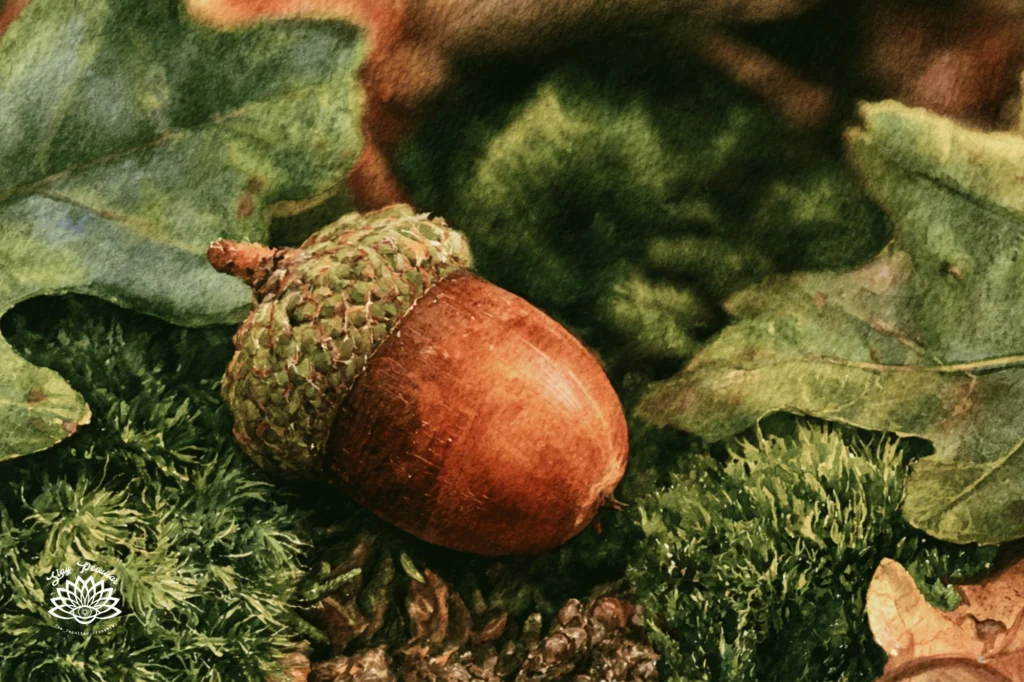
You don’t need to buy special decorations to create your Mabon altar. Look at what’s actually happening outside where you live. Gather fallen leaves, acorns, seed heads, garden produce, dried flowers, stones, or other natural objects to represent this season in your area.
Consider the witchcraft tools or Pagan symbols you add as well. What does each object mean to you? Why do you want to include it? I love to add at least one object to represent what I’m grateful for. Additionally, something I’m working toward and preparing for. It’s a lovely snapshot of who you are during this season of your life.
Two Candle Flames Equinox Ritual
The seasons don’t change like someone flipped a switch, and neither do we. This candle magic ritual represents how endings and beginnings can exist at the same time using candle color meanings. Feel free to use whichever color resonates with you; mine are simply suggestions.
Light a purple candle for what you’re ready to leave behind. Purple’s connection with wisdom, intuition, and spiritual growth makes it a good choice for reflecting on what an experience taught you before allowing it to end.
Next, light an orange candle for something you want to bring with you into the next season. Orange represents creativity, motivation, confidence, happiness, and forward movement. Let it represent a creative project, newfound confidence, or simply more joy.
I like to use two taper candles for this, but feel free to use whatever type you prefer. Let both candles burn together for a while. Don’t try to rush the orange one to extinguish just because it represents something you’re ready to end.
Notice how both flames can exist beside each other. You can be excited and ready to move forward, while also being grateful for the experience you’re ready to let go.
If you’d rather see this type of magic in action, I also have a candle magic series on YouTube with examples you can watch and adapt to your own spiritual practice.
Celebrating Mabon in the Southern Hemisphere
In the Southern Hemisphere, September marks the spring equinox rather than the autumn equinox, so some Pagans celebrate Ostara or another spring celebration.
Don’t feel the need to force your spiritual practice to follow the Northern Hemisphere season. Pay attention to what’s happening in the land around you and allow that to guide your seasonal celebration.
I hope you enjoy your Mabon autumnal celebration in 2026! Lots of love to you, and remember, as always…

Sources
Hutton, Ronald. Pagan Britain. Yale University Press, 2013.